
Print that supports the job
Course information, exercise packs, prospectuses and event signs have different readers and approval needs. A pupil workbook should be practical to use; an open-day guide should help a family navigate the visit.
Prospectuses, event programmes, classroom posters, certificates and wayfinding. Match the mix to the audience and the location rather than ordering every format by default.
Plan around real constraints
Keep dates, contact points and safeguarding language under the school’s approval process. Plan around term dates and distribute versions for different audiences.
From brief to approved print
- List the audience, venue, display or distribution point and required date.
- Confirm the content owner and approval route for names, prices, dates and any regulated wording.
- Choose a small set of complementary formats and request a specification and quote.
- Proof the final artwork at its finished size before production.
Relevant products
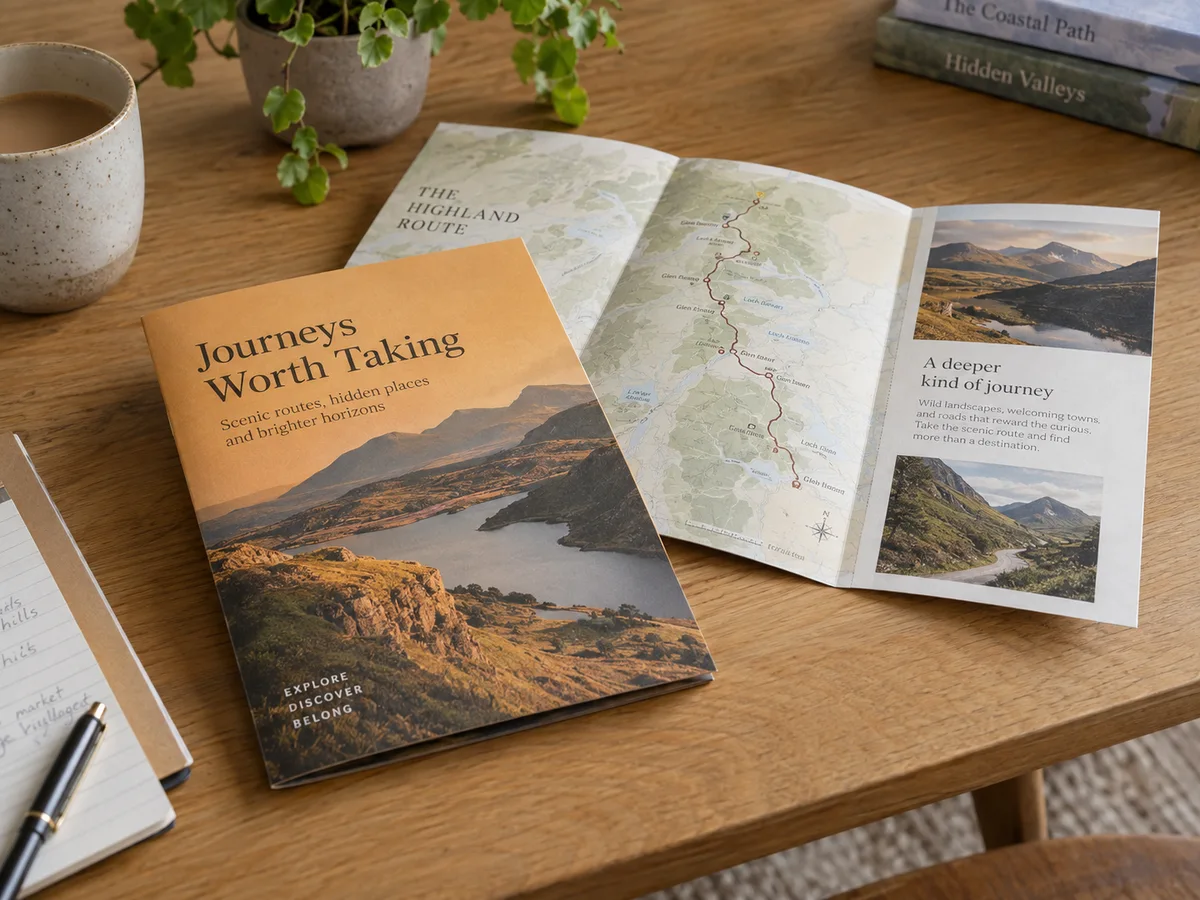
Brochures and booklets
Help readers navigate a longer offer with a sensible page plan, binding and paper choice.
Read the guide →
Posters
Choose a poster by viewing distance and display setting, not only by a familiar A-size.
Read the guide →A print brief in practice
An open day could use a stable prospectus with a current route sheet and session timetable. Proof room names against signs, then pack the quantities by entry point. Families should find the next session without opening every booklet page.
Read it where it will be used
Test pages at the final size, including diagram labels, line spacing and writing areas. A reduced photocopy or small plan may technically fit but be difficult to follow.
Keep the schedule and approvals connected
Coordinate approval with the actual term or event date. Keep timetables and named contacts replaceable, and confirm which version each class or year group needs.
How should we check teaching images before printing packs?
Inspect the original pixels and the retained crop at output size. Aim for 300 effective PPI for close-viewed photographs; keep suitable diagrams and labels as vectors and check a physical copy for the smallest essential detail.
Make the quote clear
Provide class or cohort quantities, page count, colour needs, binding, writable areas and approved diagrams. State any accessible-format requirements before the layout is final.